
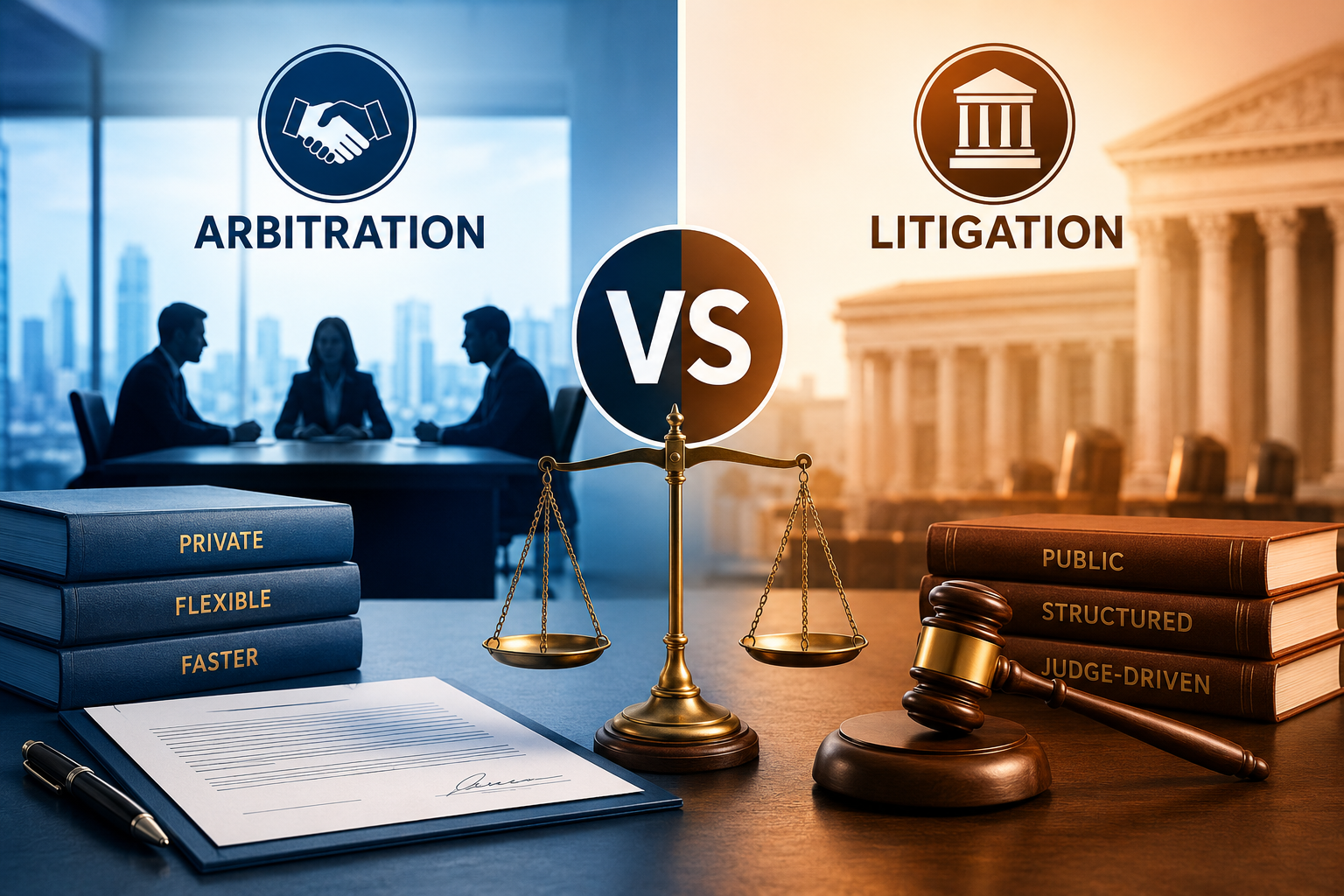
Arbitration vs. Litigation: Choosing the Best Legal Solution
Legal disputes can feel like traffic jams in Delhi during peak hours. Everyone wants a quick solution, but the route you choose decides how stressful the journey becomes. That is why understanding Arbitration vs. Litigation matters for businesses, startups, property owners, and even individuals dealing with contracts or commercial conflicts.
Many companies today consult an Arbitration lawyer in Delhi before signing agreements because dispute resolution clauses now play a major role in business security. A smart legal strategy can save time, money, and professional relationships.
We will tell you how arbitration differs from litigation in terms of process, benefits, and how to choose one that is most beneficial for you in this article.
Understanding Arbitration and Litigation
Before comparing the two, let us simplify the basics.
What Is Arbitration?
It refers to private means for resolving disputes where two parties opt to hire a neutral arbitrator to decide on their case.
Business organisations find such a method more favourable because of the increased level of privacy and speedy resolution associated with the process.
In India, arbitration takes place through the procedure stipulated in the Arbitration and Conciliation Act of 1996.
What Is Litigation?
Litigation means the procedure adopted for resolving legal disputes through litigation. The judge hears the arguments presented by all parties involved and then makes his decision according to the law.
Litigation is highly effective for criminal cases, constitutional questions, family disputes, and when judicial intervention is needed.
But the judicial process may entail several sittings with documentation and procedural steps involved. If you have ever been in a courtroom, you know what “next date” really means.
Also Read: Best Advocate in Delhi High Court for Civil, Criminal & Corporate Matters
Arbitration vs Court: The Core Difference
Many people search for arbitration vs court because they want clarity on which process offers better results.
| Factor | Arbitration | Litigation |
| Process | Private | Public |
| Decision Maker | Arbitrator | Judge |
| Speed | Usually faster | Often slower |
| Confidentiality | High | Limited |
| Flexibility | More flexible | Strict procedures |
| Appeal Options | Limited | Multiple appeal stages |
| Cost | Can be cost-effective | Can become expensive over time |
The right choice depends on your dispute type, urgency, confidentiality needs, and budget.
Why Businesses Prefer Arbitration
Modern businesses increasingly choose arbitration clauses in contracts. Here is why.
1. Faster Resolution
Cases that arise in Indian courts might stretch over many years because of the procedures involved. However, in the case of arbitration, disputes in commercial transactions are resolved quickly because the participants can plan the hearing times effectively.
As per the data from NITI Aayog and the ongoing discussion on legal reforms in India, India has always been moving forward towards institutional arbitration.
2. Privacy Matters
Court proceedings usually become part of the public record. Arbitration stays confidential.
For companies handling trade secrets, financial disputes, or partnership conflicts, confidentiality becomes extremely valuable.
No business owner wants sensitive information floating around like viral social media gossip.
3. Expert Decision Makers
For instance, where there is a disagreement relating to construction issues, one may decide to have an arbitrator who specialises in infrastructure agreements.
This often improves the quality of decisions.
4. Flexible Procedures
The process of arbitration makes it possible for the parties to determine when and how the proceedings should take place as well as how to settle their differences. This, in turn, reduces unnecessary complexities.
A competent Arbitration lawyer in Delhi will ensure that businesses draft sound arbitration clauses that safeguard their interests for the future.
When Litigation Makes More Sense
Although arbitration offers many benefits, litigation remains essential in several situations.
Cases Requiring Judicial Authority
Courts hold stronger enforcement powers. Criminal cases, constitutional matters, consumer protection disputes, and family law issues usually require litigation.
Appeals and Legal Safeguards
Litigation offers structured appeal mechanisms. If a party believes the judgment contains legal errors, higher courts can review the matter.
Arbitration awards have limited grounds for challenge under Indian law.
Public Interest Matters
Some disputes involve public rights or legal interpretation that require judicial transparency. Courts handle these situations more effectively.
Litigation vs Arbitration: Which Costs Less?
The answer depends on the complexity of the dispute.
Many people assume arbitration always costs less. That is not completely true.
Arbitration Costs
Arbitration may involve:
- Arbitrator fees
- Venue costs
- Administrative expenses
- Legal representation fees
For smaller disputes, arbitration can sometimes become expensive if multiple arbitrators participate.
Litigation Costs
Litigation includes:
- Court fees
- Lawyer charges
- Documentation expenses
- Long-term procedural costs
However, lengthy court proceedings often increase overall expenditure due to repeated hearings and delays.
In commercial disputes, businesses usually compare the value of time alongside legal expenses. Losing productivity for years can hurt more than legal fees themselves.
How to Choose the Right Legal Solution
Choosing between litigation vs arbitration depends on several practical factors.
Choose Arbitration If:
- You want confidentiality
- The dispute involves commercial contracts
- You need a faster resolution
- Both parties prefer flexible procedures
- Industry expertise matters
Choose Litigation If:
- The dispute involves criminal or constitutional law
- You need court enforcement powers
- Public accountability matters
- You want broader appeal rights
A trusted legal advisor can evaluate the dispute and suggest the most effective path.
Businesses seeking structured legal guidance trust Global Judex Law Firm for professional commercial dispute resolution strategies and expert arbitration legal support.
Final Thoughts on Arbitration vs. Litigation
The debate around Arbitration vs. Litigation does not have one universal winner. Both systems serve important legal purposes.
Arbitration offers speed, privacy, and flexibility. Litigation provides judicial authority, transparency, and stronger appeal structures.
The smartest approach depends on your dispute type, financial priorities, timeline, and legal objectives.
Businesses today increasingly include arbitration clauses in contracts because efficient dispute resolution supports long-term growth and stability. At the same time, courts remain essential for matters requiring formal judicial oversight.
If you are handling a commercial dispute or drafting a business agreement, our experienced Arbitration lawyer in Delhi team provides strategic legal solutions tailored to your case requirements.
At Global Judex Law Firm, we offer professional arbitration support, dispute resolution services, and strong courtroom representation through our Best Advocate in Delhi High Court team.
Contact Global Judex Law Firm Today
Get trusted legal guidance for arbitration, commercial disputes, and litigation matters. Our legal experts are ready to protect your rights and help you choose the most effective legal solution for your case.