
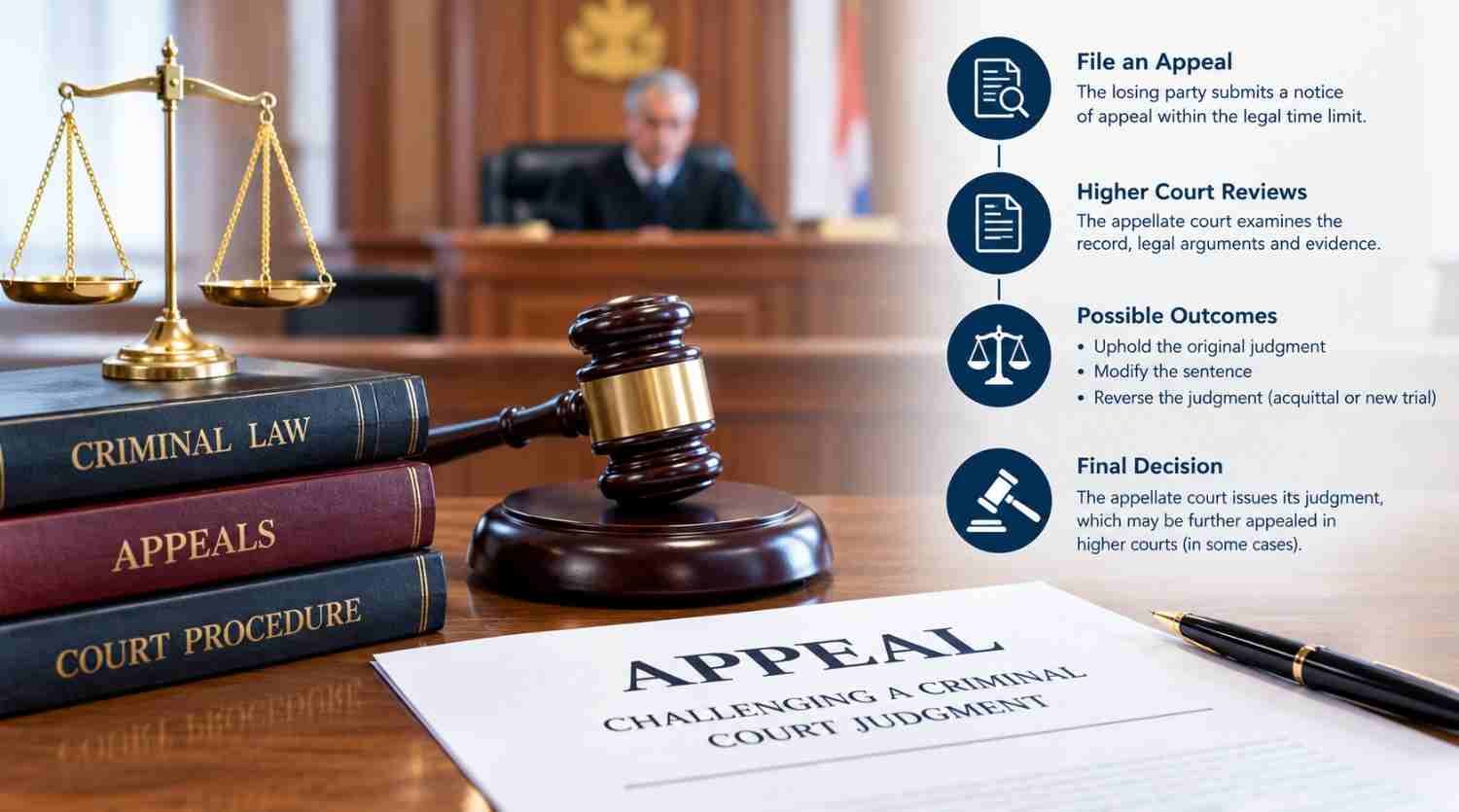
What Happens When a Criminal Court Judgment Is Challenged on Appeal
A criminal court judgment can affect a person’s freedom, reputation, and future for a long time. If someone thinks that the court made a mistake—like misunderstanding evidence or giving a sentence that is too harsh—they might be able to challenge the decision. This is done through an appeal. Knowing the criminal appeal process in India can help individuals understand their rights and what steps they need to take. It gives them a path when they feel the law was not applied fairly.
Global Judex Law Firm assists people in comprehending the process of law and making educated decisions. Hiring a Criminal Lawyer in Delhi will assist you in judging the situation, knowing the deadlines, and figuring out whether to appeal or not.
What Is the Criminal Appeal Process in India
Criminal appeals are proceedings where an eligible party seeks the review by a higher court of the decision made by the lower court. The appeal can be based on an issue that concerns the acquittal, conviction, sentence, or even another order that is appealable.
The purpose is to examine whether the court applied the law correctly and considered evidence and relevant legal procedures properly. However, not every order can be. The right to appeal relies, on applicable law.
Global Judex Law Firm recommends understanding the nature of the judgment and the available legal remedies before deciding on the next step.
What Are the Grounds for Challenging a Criminal Court Judgment?
There must be a legally recognized basis for an appeal. The grounds for criminal appeal depend on the facts of the case, the judgment, and the relevant legal provisions.
Common grounds may include:
- Errors in applying the law: The court may have misunderstood or incorrectly applied a legal provision.
- Improper assessment of evidence: Important evidence may not have been properly considered, or the findings may not be supported by the record.
- Procedural irregularities: A serious failure to follow the required legal procedure may have affected the case.
- Incorrect sentence: The sentence may be challenged if there is a valid legal basis to question its legality or appropriateness.
- Unreasonable findings: The conclusions reached by the court may be challenged where the law permits and the case record supports the argument.
Simply disagreeing with the outcome is not always enough. The appeal must rely on relevant legal grounds.
How Does the Criminal Appeal Filing Process Work?
The criminal appeal filing process involves several important steps. The exact procedure depends on the type of judgment and the court that has authority to hear the appeal.
- Review the judgment: Read the judgment and identify the findings or legal issues that may be challenged.
- Identify the grounds of appeal: Determine which errors or issues can legally support the appeal.
- Prepare the appeal petition: Set out the relevant facts, grounds, and relief being requested.
- Collect supporting documents: These may include the judgment, relevant court records, and other required documents.
- File before the appropriate court: Submit the appeal according to the applicable rules and procedural requirements.
- Follow court directions: Respond to objections, attend hearings, and comply with any directions issued by the court.
Anyone learning how to appeal a criminal court decision should remember that filing requirements can vary. Global Judex Law Firm can help explain the procedural requirements relevant to a particular case.
What Is the Time Limit for a Criminal Appeal?
The time limit for an appeal varies depending on things like the kind of decision being appealed, who is asking for the appeal, and the rules that are, in place. Different kinds of appeals can have different time limits that apply to them.
In India, the Bharatiya Nagarik Suraksha Sanhita (BNSS), 2023 came into force on 1 July 2024, replacing the Code of Criminal Procedure for matters governed by the new law. Transitional provisions may affect certain pending proceedings.
It is important not to assume that every criminal appeal has the same deadline. If a limitation period has expired, a court may permit a delayed appeal in circumstances allowed by law, but such permission is not automatic. Seeking legal advice promptly can help avoid unnecessary delays.
What Happens During a Criminal Appeal Hearing?
During a criminal appeal hearing process, the appellate court examines the appeal, the relevant case records, and the arguments presented by the parties. Depending on the case, the court may consider whether the lower court correctly interpreted the law and evaluated the evidence.
The court may ask questions, hear submissions from the parties, and examine whether the grounds raised justify interference with the earlier decision.
Preparing legal arguments and finding the relevant parts of the record are important. In cases, guidance from the Best Advocate in Delhi High Court can help a person understand the appeal procedure and present their case effectively with a focus, on the appeal procedure.
What Decisions Can an Appellate Court Make?
The outcome depends on the facts, applicable law, and grounds raised in the appeal. After reviewing the case, the appellate court may:
- Dismiss the appeal and uphold the earlier decision.
- Set aside or modify a conviction or sentence where legally justified.
- Order a retrial or further proceedings when permitted by law.
- Pass another appropriate order within its legal powers.
An appeal does not guarantee that the original judgment will be changed. The court must consider the legal and factual basis of the challenge before reaching a decision.
Can a Sentence Be Suspended While a Criminal Appeal Is Pending?
In some cases a person can ask for a suspension of their sentence. They may also request release on bail while the appeal is still ongoing. The court looks at the laws and the specific situation before deciding on the request.
Suspension is not automatic simply because an appeal has been filed. The person must meet the relevant legal requirements, and the court’s decision will depend on the case.
Global Judex Law Firm can help individuals understand the difference between filing an appeal and seeking separate relief while it is pending.
What Should You Do After a Criminal Appeal Is Decided?
Once the appellate court makes its decision, take the time to read the order carefully and make sure you understand what it means legally. After that you might need to follow the instructions given by the court or ask for legal advice about any options you have under the law.
Make sure to save copies of the judgment, the appeal documents, and any other related orders. Don’t think that another appeal or challenge will happen on its own because there might be rules and limits, for any further options.
When Should You Consult a Criminal Lawyer About an Appeal
Legal advice can be helpful right after you receive a criminal court judgment that you believe is incorrect. Getting help early can show you what options you have, help you find reasons to appeal, let you prepare the documents, and make sure you are still within the time limit.
Global Judex Law Firm helps people learn about legal procedures and find out what next steps might suit their situation. If you need help challenging a judgment, get in touch with the firm. You will speak with them about your case. Learn what legal options could be open to you.