What Legal Risks Should Businesses Check Before Signing a Commercial Contract
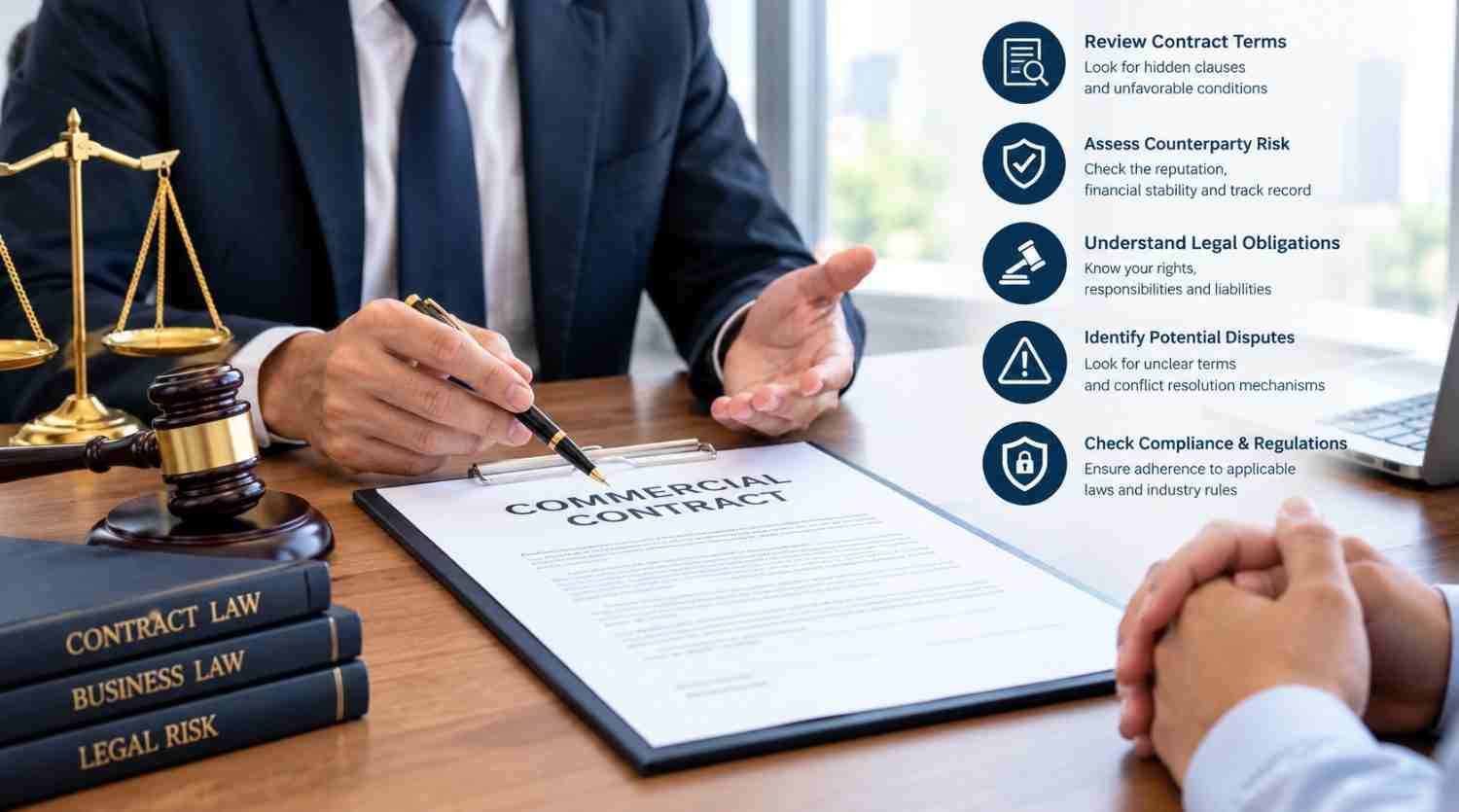
Signing a commercial contract is an important step for any business. Whether you are working with a supplier, entering a partnership, or hiring a service provider, the terms of the agreement can affect your money, responsibilities, and future business decisions. Understanding Commercial Contract Legal Risks before signing can help you avoid misunderstandings and costly disputes.
Global Judex Law Firm helps businesses understand problems and make smart choices. Getting advice from a Company lawyer in Delhi can also help you look at parts of a contract and find any issues before you agree to anything.
Why Should Businesses Review a Commercial Contract Before Signing?
A commercial contract is an agreement between two parties, specifying the terms for the payment and its consequences in case one of the parties fails to fulfill their duties. It is important not to make even the slightest mistake.
A careful review helps businesses understand their rights and obligations before signing. It also provides an opportunity to negotiate unclear terms instead of dealing with problems later. Global Judex Law Firm recognizes the importance of clear agreements in supporting sound business decisions.
7 Legal Risks to Check in a Commercial Contract
Before signing, pay close attention to the following legal risks in commercial contracts.
1. Unclear Terms and Responsibilities
Every party should be aware of its obligations. Inconsistencies in the explanation of the services, the nature of the goods, the delivery period, and the responsibilities of the project can lead to confusion.
Make sure to understand what obligations the contract imposes on you.
2. Payment Terms, Hidden Charges, and Penalties
Payment-related business contract risks can impact how money flows in and out of the company. These risks can also affect how well a business works with others. Look at the payment schedule, taxes, any fees, interest for late payments, and possible fines. Make sure to find out when invoices need to be paid. Also check if the agreement has any costs that might not be clear at first.
3. One-Sided Liability and Indemnity Clauses
Some contracts ask one person to pay more money than the other. Liability and indemnity sections say which person might have to pay for problems, complaints, or injuries.
Check if these parts are easy to understand, and fair for the deal and match the risks each person is taking.
4. Termination Rights and Notice Periods
Businesses should understand how an agreement can be ended. Check the agreement’s notice period, check the agreement’s grounds for termination, check the agreement’s payment obligations, and check the agreement’s early‑exit charges.
A contract, with termination conditions, can make it difficult to leave an arrangement that no longer meets business needs.
5. Breach of Contract and Dispute Resolution
A breach may happen when a party does not meet an agreed obligation. I think a breach also means the contract must explain what happens if there is non-performance and how disputes will be handled.
Review the dispute resolution process, including negotiation, mediation, arbitration, or court proceedings where applicable. I think the correct dispute resolution approach depends on the agreement and relevant law.
6. Confidentiality and Intellectual Property Rights
Commercial agreements often hold business information, customer details, designs, software or other intellectual property.
I always double‑check who can use information, how that confidential information must be protected, and who owns any work or intellectual property created under the commercial agreement.
7. Automatic Renewal and Contract Changes
Some contracts renew automatically unless a party gives notice within a specified period. Others allow changes only through a written amendment.
Check renewal dates, notice deadlines, price revision terms, and the procedure for approving changes. Keep written records of any agreed amendments.
What Should You Check Before Signing a Commercial Agreement?
Knowing the things to check before signing a contract can make the review process more organized. Global Judex Law Firm recommends confirming the legal names of all parties, their authority to sign, and the accuracy of the agreement’s details.
You should also review the main contract, schedules, appendices, and any documents incorporated by reference. Make sure they do not contain conflicting terms.
Use this simple checklist:
| Contract area | What to verify |
| Payments | Due dates, taxes, additional charges |
| Responsibilities | Clear duties and deliverables |
| Liability | Limits, exclusions, indemnities |
| Termination | Exit rights and notice periods |
| Disputes | Resolution method and jurisdiction |
These checks can help identify commercial agreement legal issues before they become harder to resolve.
How Does a Commercial Contract Review Help Reduce Business Risks?
A proper commercial contract review examines the agreement as a whole rather than focusing on individual clauses alone. It helps identify vague wording, inconsistent terms, unexpected obligations, and provisions that may need negotiation.
The business contract review process should also confirm that agreed changes appear in the final document. Verbal promises may not be enough to protect your interests, so make sure important changes are properly recorded in writing.
A thorough business agreement legal review can help you understand the agreement before deciding whether to sign it. Global Judex Law Firm encourages businesses to pay attention to both immediate obligations and possible long-term consequences.
What Can Happen If a Business Signs a Risky Contract?
Such an agreement might lead to delays in payment, costs, late timeline disagreements about who does what, or difficulties when ending the business relationship. In serious cases it could even result in a court case.
Depending on how the contract is written, the facts, the evidence, and the current state of the law, it can have various implications. It does not necessarily mean that all negative provisions would automatically become invalid; businessmen should be careful in making any presumptions.
When Should You Seek Legal Advice Before Signing a Contract?
Legal counsel can be particularly helpful if there is any kind of financial obligation, a business association for some time, complicated liability clauses, sensitive information, or substantial penalty upon termination of the agreement. An attorney can help understand the implications of these clauses, point out any problems, and recommend modifications wherever necessary. If any commercial dispute leads to litigation, the Best Advocate in Delhi High Court would have relevance.
Global Judex Law Firm can help businesses understand commercial legal concerns and consider suitable next steps based on their circumstances.
Protect Your Business with a Careful Contract Review
There needs to be clear specification of the obligations and entitlements of each party in a business contract. The methods by which any disputes that may arise shall be sorted out need to be outlined. Looking into matters such as payment, liabilities, termination, confidentiality, and dispute resolution before signing is something that could benefit your business decisions.
Before signing the deal, try taking time to understand the terms of the contract. You should contact the Global Judex Law Firm concerning your business contract issues.